
«Over the past few years, we have analysed dozens of platforms. The main takeaway — safe play always begins with understanding the rules. In sports and lottery analytics, trust and transparency matter more than promises of enormous jackpots.» — Nadia Farzana Haque, Editor-in-Chief, iGaming Bangladesh.
Last updated: June 2026
Online Lottery Guide: How to Play, Get Tickets and Enter Free Draws
Three things worth knowing before you start:
- Official online lottery ≠ lottery betting. One gives you a real ticket from the operator. The other is a wager placed with a third-party bookmaker. The legal distinction matters more than most people realise.
- "Free" lotteries pay with your data. Most zero-cost entry platforms monetise via advertising, email capture, or by retaining up to 50 % of any jackpot you help win.
- Jurisdiction is everything. Legal access to play and buy tickets depends on where you are — always verify local rules first.
What Online Lottery Means and How It Differs from Lottery Online Offers
The term online lottery refers to the legal purchase of tickets from a licensed operator via the internet. The search query lottery online, on the other hand, often leads to third-party bookmaker sites or offshore platforms. That difference is not cosmetic — it is legal.
In the first case, you enter a contract with a state-run or officially sanctioned organiser. In the second, you place a bet on drawn numbers through an intermediary. Same numbers, very different products.
«National surveys treat online lottery as the same licensed product delivered through digital channels, not a fundamentally different game.» — Gambling Survey for Great Britain, Gambling Commission (2023). https://www.gamblingcommission.gov.uk/statistics-and-research/publication/gambling-survey-for-great-britain-2023
Under the UK Gambling Commission framework, an external lottery manager may sell tickets on behalf of a society lottery — this is still a ticket sale, not betting. A betting product is legally distinct because the customer contracts with the bookmaker on the outcome, not with the lottery organiser. That changes the product classification and the entire licensing route.
- Lottery —A regulated game where participants purchase a chance to win, with the prize pool formed from stakes.
- Online lottery —Official participation in draws via the internet (website or app of a licensed operator).
- Lottery online —A user and marketing term covering any type of draw on the internet, including third-party platforms and bookmakers.
- Ticket —A digital or physical proof of the right to participate in a draw.
- Draw —The random selection of a winning combination, conducted by the organiser.
- Results —Officially published draw outcomes and prize distributions.
- Free —A participation format without direct payment (bonus entries or marketing integrations), requiring particular attention to fraud risks and hidden conditions.
Online Lottery, Lottery Online and Free Lottery Online
The differences in these formulations directly affect what search engines serve you. The query online lottery targets a legal electronic ticket. Users searching free lottery online expect participation without financial outlay. In practice, such free formats are monetised through data collection, ad impressions, or email-consent requirements — rarely through genuine generosity.
An online lottery app unifies these intents by providing a portable interface for managing digital assets and checking licensed gaming platforms. Worth noting: the app itself does not change the underlying product. A lottery ticket bought through an app is the same ticket bought through a desktop browser — the licence behind it is what counts.
Tickets, Numbers, Draws and Results in One Flow
The lifecycle of digital participation follows a strict sequence. A player obtains lottery tickets and locks in their numbers. On the server side, data is linked to a specific draws schedule. After results are announced, the system automatically compares combinations and, upon a match, initiates verification and prize crediting.
«The Florida Lottery app allows players to scan physical tickets with a smartphone, instantly verifying a win and displaying prize details.» — Florida Lottery Performance Review, OPPAGA (2024). https://oppaga.fl.gov/Documents/Reports/24-02.pdf
For example, a Powerball result might look like this: [ 04 ] [ 07 ] [ 20 ] [ 33 ] [ 43 ] + Powerball [ 21 ]
The system matches every ticket against these numbers within seconds of the official draw. No manual checking required — though plenty of players still watch the broadcast with their ticket in hand. Old habits die hard.
How to Play the Lottery Online Step by Step
The legal participation process includes four stages: creating an account, age verification, depositing funds, and issuing a digital ticket. Access to play is impossible without completing the verification (KYC) step. Platforms are required to confirm the legality of the user's presence in their territory before anything else happens.
«According to the Gambling Survey for Great Britain 2023, 36 % of adults had participated in lottery draws in the past four weeks — the most common form of gambling.» — Gambling Commission (2023). https://www.gamblingcommission.gov.uk/statistics-and-research/publication/gambling-survey-for-great-britain-2023
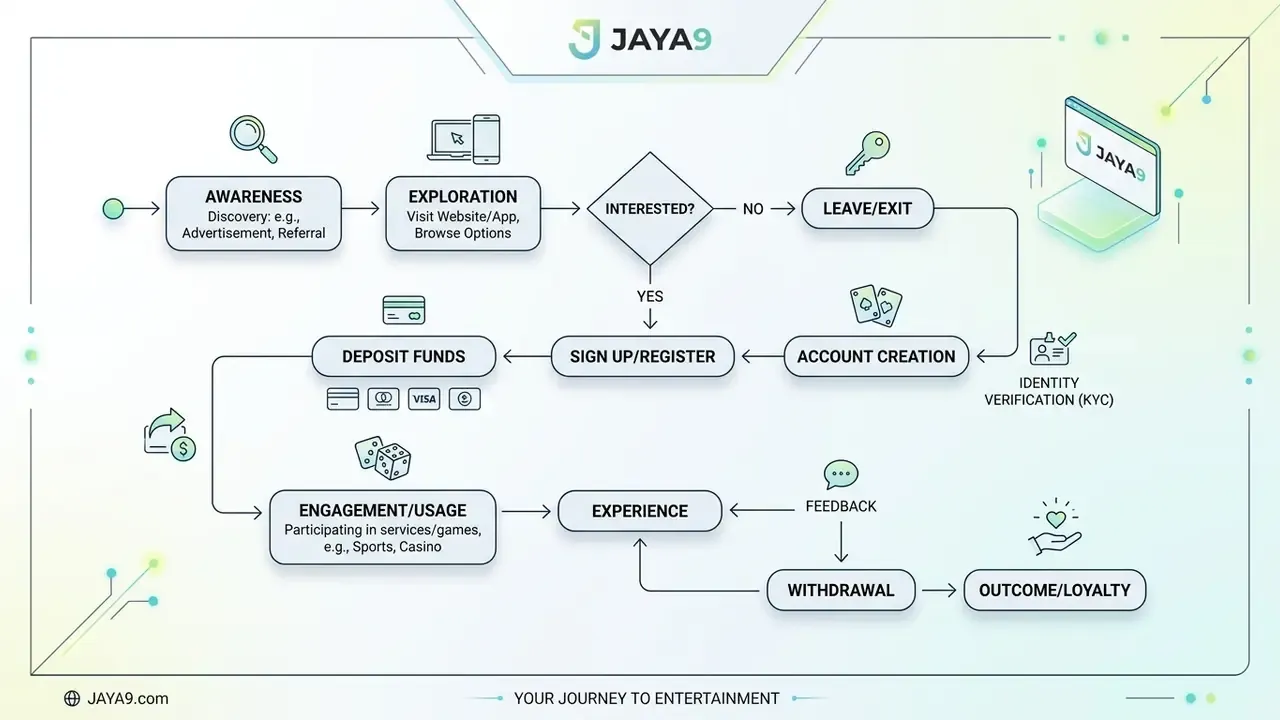
- Registration and KYC. Mandatory identity verification — passport or national ID, proof of address. This step alone filters out most fraudulent platforms, because scam sites rarely invest in proper verification infrastructure.
- Deposit. Topping up the internal account via card, bank transfer, or e-wallet.
- Draw selection. The user decides to enter a draw and picks combinations manually or uses Quick Pick.
- Ticket issuance. The system generates a ticket and records it in the database. A scanned copy or digital receipt appears in the user's account.
- Waiting. Automatic comparison after results are published.
Quick checklist — how to spot a legitimate platform:
- ✅ Licence number displayed in the footer (e.g., Malta Gaming Authority, UK Gambling Commission).
- ✅ SSL certificate (padlock icon in the browser).
- ✅ Clear T&C accessible before registration — no hidden fees.
- ✅ Published complaints policy and customer support contact.
- ❌ If the site asks for payment to "claim" a prize — it is a scam. Full stop.
How to Get Lottery Tickets and Enter Draws
Access to tickets opens only for active and verified users. To get tickets, you need to select a game and confirm the deduction of funds. Many aggregators offer users the ability to enter multiple draws in advance, automating ticket purchases for coming weeks. Convenient? Absolutely. But it also means spending can accumulate quietly if you are not paying attention.
«In the state of Florida, players create digital playslips in the app, which a retailer scans to issue an official ticket — eliminating manual-entry errors.» — Florida Lottery Performance Review, OPPAGA (2024). https://oppaga.fl.gov/Documents/Reports/24-02.pdf
Based on recurring reader feedback about hidden subscription fees, the editorial team at iGaming began publishing detailed T&C breakdowns, which has significantly reduced financial missteps among the audience. (Methodology note: this is an editorial observation, not a statistically measured claim.)
How Results Are Checked After the Draw
Aggregators have fully automated the ticket-checking process. Immediately after a draw concludes, the system matches the numbers on tickets against official data. Notifications about outcomes arrive via email or push in the application. Platforms like TheLotter upload a scanned copy of every ticket to the user's account so ownership is verifiable before and after the draw.
One practical tip: always cross-reference your notification against the official lottery website. It takes thirty seconds and eliminates any doubt.
«Consumers should check results only through official channels: unsolicited notifications about winnings with a request to pay "fees" are a sign of fraud.» — South Carolina Dept. of Consumer Affairs. https://consumer.sc.gov/sites/default/files/Documents/Resources/Spotlight_Prize_Lottery_Sweepstakes_Scams.pdf
Free Lottery Online: What Value Users Look for Before Joining
Disclaimer: The information below is general in nature and does not replace consultation with a licensed operator or a lawyer. Before participating in any lottery scheme, verify its legality in your jurisdiction.
Users seek the opportunity to win without risking their own money. That is understandable. But the real benefit of free draws often amounts to exchanging personal data for an illusory chance. The question is not "Is it free?" — the question is "What am I actually paying with?"
«The FTC warns: scammers demand "taxes" or "fees" for a supposedly won prize — legitimate lotteries never charge winners up front.» — "Are you really the lucky winner? Spot the prize scams", FTC (2023). https://consumer.ftc.gov/consumer-alerts/2023/prize-scams
| Criterion | Paid online lottery (licensed) | Free lottery online (marketing) | Free lottery online (scam) |
|---|---|---|---|
| Entry cost | Clear price per ticket. | Free, but in exchange for email/phone. | Hidden commissions or "taxes" on "winnings". |
| Ticket type | Official electronic record. | Bonus line or giveaway entry. | Fictitious tickets. |
| Draws | Government or independent audit. | Platform's internal randomiser. | Non-existent draws. |
| Potential benefit | Chance to win real money. | Small prizes, extremely low chance of a win. | Loss of data or finances. |
Free Entry, Tickets and Bonus-Style Mechanics
Free-entry mechanics are built on attracting attention. The term free is often used as a trigger for account registration. In return, the player receives bonus tickets tied to strict wagering conditions — or that do not entitle the holder to a cash jackpot payout at all.
Some platforms operate as lottery pools (syndicates): they purchase tickets at their own expense, but their T&C stipulate retention of up to 50 % of the "net" jackpot winnings if a ticket wins, distributing the remainder among thousands of members. For example, MyFreeLottoPool.com states openly: "Freelotterypool.com retains 50 % of 'net' Jackpot winnings… The remaining 50 % of the net multi-million dollar winnings will be paid out to members."
That is not necessarily a bad deal — but it is a deal you should understand before you join. Always read the full terms to see how prizes are split. The word "free" rarely means what it suggests at first glance.
What Users Expect When They See Win and Millions
Triggers like mega and millions create a distorted perception of probability. Behavioural research demonstrates this clearly.
«In the 3D lottery game, sales of just-drawn winning numbers dropped by roughly 30 % the next day — players avoided "recent winners" despite probability theory.» — Kong et al., analysis of 3D/4D lottery number sales (2024), summarised by NYU Stern. https://www.stern.nyu.edu/experience-stern/news-events/apps-vs-scratch-offs-does-sports-betting-cannibalize-lottery-sales
«A study of Danish online lottery players found that men were significantly less likely to bet on numbers drawn the previous week — a classic manifestation of the gambler's fallacy.» — Systemlotto (Denmark) study (2011). https://www.sciencedirect.com/science/article/pii/S0167268111000618
This phenomenon is known as the Illusion of Control, first described by psychologist Ellen Langer (1975). Marketing leverages these cognitive biases to stimulate registrations — words like "mega" and "millions" exploit the gap between actual odds and perceived probability. The odds of winning the Powerball jackpot are roughly 1 in 292.2 million. That number is worth sitting with for a moment.
Online Lottery App and Mobile Access: When It Matters
A mobile application is useful not only for making purchases. It adds device-level security features — biometric login via fingerprint or Face ID, which many lottery apps now support — and delivers instant push notifications. The online lottery app format makes sense for those who value speed: scanning physical barcodes, quick access to results, and secure game-balance management of their draws portfolio.
That said, an app is a tool, not a necessity. If you play once a month, a browser works just fine. The app becomes genuinely valuable for regular participants who manage multiple tickets across different draws.
Using an App for Tickets, Draws and Results
The app translates the paper experience into a digital pocket. Tasks the software solves: digitising tickets via camera, alerting five minutes before draws, and providing secure fund withdrawal after results are published. This simplifies balance control and reduces the risk of losing a physical coupon — something that has cost real people real jackpots over the years.
«A naturalistic smartphone gambling experiment showed that participants continued returning to the app even in a phase when winning was impossible — habit forms quickly.» — Naturalistic smartphone gambling experiment (2019). https://www.sciencedirect.com/science/article/pii/S0306460319301406
This finding underscores a critical point: the convenience of mobile access can accelerate habitual behaviour. Players should set conscious boundaries before installing any gambling-related app. Convenience is a feature. Compulsion is a risk.
Online Lottery Bangladesh: How Users Interpret This Query
Disclaimer: This information is educational in nature. Participation in online lotteries may be restricted or prohibited by the laws of your country. Consult a local regulator before taking any action.
The query online lottery Bangladesh reflects the local audience's search for international platforms. Yet the country's legislation strictly limits such activities. There are no legal domestic operators of digital lottery draws in Bangladesh. Users expect access via an app and free lottery scenarios without always understanding the legal framework — or, frankly, the risks involved.
The Cyber Security Act, 2023 (Bangladesh) and the Penal Code restrict participation in gambling activities. Users must verify the legality of any international service in their jurisdiction before engaging. Online availability of lotteries depends fundamentally on jurisdiction: in Florida, full online ticket sales are not yet permitted, whereas in Georgia digital tickets are already sold officially (Florida Lottery Performance Review, OPPAGA, 2024. https://oppaga.fl.gov/Documents/Reports/24-02.pdf).
Legal Disclaimer: Access to online lottery, tickets, draws, and app formats strictly depends on your jurisdiction. The Bangladesh Cyber Security Act (2023) and the Penal Code restrict participation in gambling. Users are obligated to verify the legality of international services in their country. This information is educational and does not encourage violation of local laws.
Why Location-Specific Searches Change User Expectations
Geo-dependent queries encounter strict filtering at the IP-address level. Legal international aggregators block the play function for jurisdictions without corresponding licences. A user from a restricted region can access view information and results, but cannot purchase a ticket. The platform sees your location before you see the buy button.
«A quasi-experimental NYU study showed that the launch of online sports betting increased lottery sales by 17.3 %, whereas retail-only sports betting reduced them by 16.4 %.» — "Apps vs. Scratch-offs: Does Sports Betting Cannibalize Lottery Sales?", NYU Stern (2024). https://www.stern.nyu.edu/experience-stern/news-events/apps-vs-scratch-offs-does-sports-betting-cannibalize-lottery-sales
This data illustrates how digital access reshapes audience behaviour — even in markets where only partial online access is available, user expectations shift toward mobile-first interaction. For Bangladesh-based readers, the practical takeaway is straightforward: check your local laws first, explore international results and information freely, but do not assume that access to a website equals legal permission to participate.
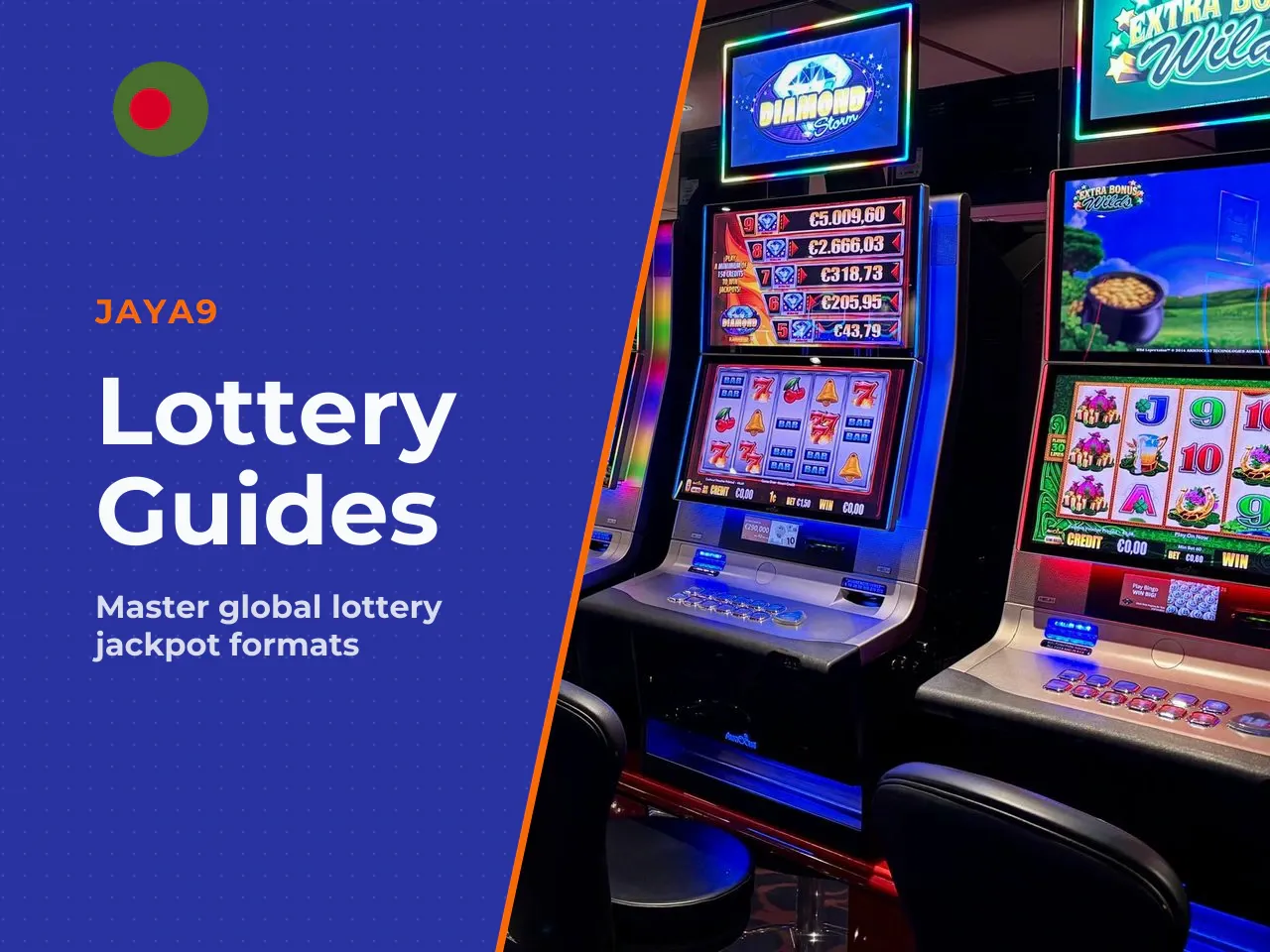
Choosing Between Major Lottery Formats: From Mega Millions to Powerball
The world's largest lottery brands divide by objective. Mega-style formats focus on accumulating a gigantic jackpot, while others pool audiences across multiple countries. The choice depends on whether a player seeks regular payouts or the opportunity to participate in a draw with a prize fund of several millions.
For readers of an iGaming analytics publication, understanding the boundary between lottery and sports betting is also essential here. The distinction is not merely regulatory — it is mathematical. In sports betting, analysis of form, injuries, and team data can improve your edge. In lottery, the outcome is purely random. No strategy changes that. Each draw is independent.
«In Georgia, scratch-off cards accounted for an average of 67 % of lottery sales from 2013 to 2023; digital "Diggi" tickets are now a separate and growing category.» — Georgia Dept. of Audits and Accounts, Tax Incentive Evaluation (2024). https://www.audits.ga.gov/rsaAudits/download?filePath=TaxIncentiveEvaluation2024.pdf
| Format / Focus | Main goal | Draw frequency | Ticket cost | Payout format | Notable record |
|---|---|---|---|---|---|
| US Powerball | Record-breaking jackpot. | Mon, Wed, Sat. | $2 per play. | Annuity (30 years) or reduced lump sum. | $2.04 billion (Nov 2022). |
| US Mega Millions | Multi-hundred-million jackpots. | Tue, Fri. | $2 per play. | Annuity or lump sum. | $1.602 billion (Aug 2023). |
| EuroMillions | Transnational European pool. | Tue, Fri. | €2.50 (varies by country). | Single tax-free payout. | Jackpot cap: €250 million. |
| EuroJackpot | Pan-European pooling, better odds. | Tue, Fri. | €2. | Single payout. | Jackpot cap: €120 million. |
| Digital Instants / Scratch-offs | High-frequency wins. | Instant (no schedule). | Varies (electronic script). | Automatically to balance. | N/A — prizes vary by game. |
A quick note on RTP (return to player): most state lotteries offer 50–65 % RTP, compared to 90–97 % for sports betting markets. That gap is significant. Lottery participation should be treated as entertainment spending — the price of a ticket is the cost of the experience, not an investment.
Explore more digital gaming formats to understand how lottery compares to other online entertainment products.
Responsible Gaming: Managing Your Budget and Expectations
Before buying a single ticket, every player should establish personal boundaries. The mathematical expectation of lottery participation is always negative — the house edge is embedded in the prize-pool structure. Treat ticket costs as entertainment spending, not investment. This is not pessimism. It is arithmetic.
Five rules for responsible lottery play:
- Set a weekly or monthly limit and never exceed it, regardless of results. Many platforms offer built-in deposit-limit tools — use them.
- Never chase losses. A losing ticket does not make the next one more likely to win. Each draw is an independent random event.
- Treat the ticket as the product. The excitement and anticipation are what you are buying. Any prize is a bonus, not a guarantee.
- Avoid subscription autopilot. If you use Advance Play, review your spending monthly. Automatic renewals can quietly erode a budget.
- Know when to step back. If lottery play causes financial stress or anxiety, seek support from responsible-gaming organisations such as GamCare (UK) or the National Council on Problem Gambling (US).
«In Pennsylvania, multichannel gamblers participate significantly more often in instant lotteries (p < 0.01), indicating higher intensity and a greater risk of losing control over spending.» — Pennsylvania Online Gambling Report (2024). https://www.gamingcontrolboard.pa.gov/files/research/Pennsylvania_Online_Gambling_Report_2024.pdf
This statistic is a reminder: the easier access becomes, the more deliberate your self-regulation must be. Convenience and discipline need to travel together.
FAQ: Questions Users Ask Before Taking Action
Yes. Legitimate platforms allow you to pick combinations manually or use the Quick Pick random-number generator. Although draw outcomes are entirely random, behavioural research confirms that self-selecting **numbers** gives the user a false sense of control over the result — a cognitive bias known as the **Illusion of Control** (Ellen Langer, 1975). Does picking your own numbers improve your odds? No. But it does change how the experience feels, and that psychological difference is exactly what marketers count on.
Most platforms support the **Advance Play** function — an auto-renewal of a ticket for 5–52 upcoming **draws**. Commercial discounts for multi-draw packages typically range from 5 % to 15 %, though no regulatory standard mandates a fixed rate. Such a subscription saves time but requires the player to adhere to responsible-gaming principles, as control over **play** spending can diminish when purchases happen automatically. A practical suggestion: set a calendar reminder to review your Advance Play subscriptions at least once a month. Automation should serve your budget, not bypass it.
You find out about a win through automatic notifications. Immediately after a **draw**, the system checks **results** in a fraction of a second and sends a message. If your **ticket** is a winner, small amounts are automatically credited to your **account**. Large jackpots require manual KYC verification of the winner — a process that can take several days or even weeks, depending on the jurisdiction and the prize amount.
If someone contacts you claiming you have won a lottery you never entered — that is not luck. That is a scam.

Conclusion and Next Steps
Online lotteries offer a convenient digital experience — from buying a ticket to checking results within seconds — but convenience must not replace vigilance. Here is what to take away:
- Verify the platform first. Look for a visible licence, SSL, and transparent T&C before creating an account.
- Understand what "free" really means. If you are not paying with money, you are paying with data — and possibly with up to half of any future jackpot.
- Separate luck from skill. Unlike sports analytics, lottery outcomes are pure chance with a negative expected value. Budget accordingly.
- Use responsible-gaming tools. Deposit limits, session reminders, and periodic self-review protect your finances and well-being.
- Check your jurisdiction. Especially for readers in Bangladesh and other restricted markets — legal compliance is not optional, it is the starting point.
If you want to stay informed, subscribe to our editorial newsletter, where we regularly publish T&C breakdowns of major lottery platforms so you can make decisions grounded in transparency, not marketing hype.
Disclaimer: This article is for informational and educational purposes only. Gambling laws vary by jurisdiction. In regulated niches — including gambling, finance, and law — readers should consult a qualified professional before taking action. The editorial team does not encourage participation in any activity that may be illegal in your country of residence.